
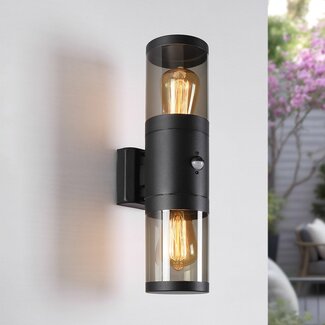
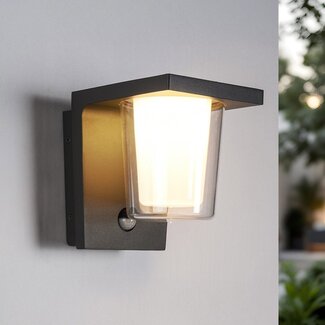
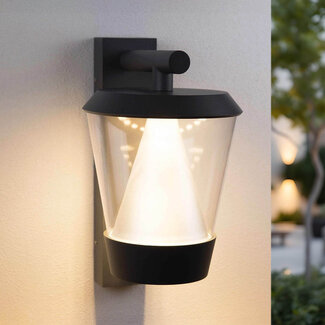
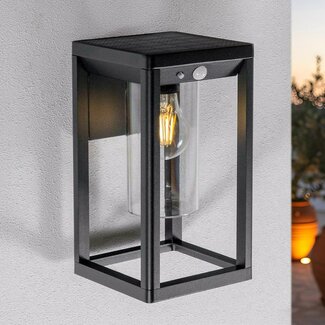
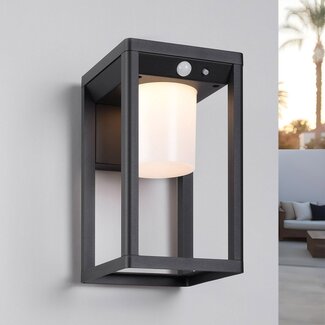
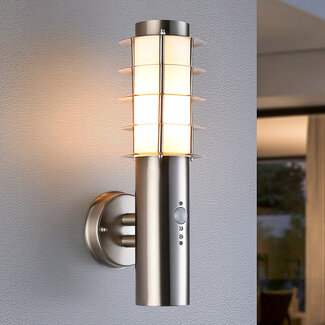
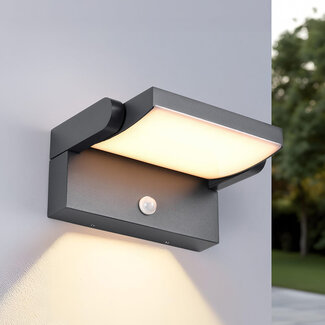
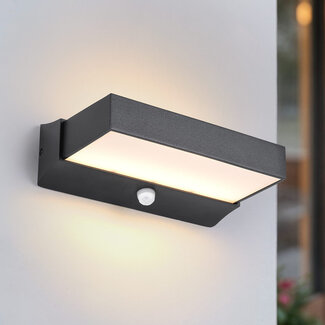
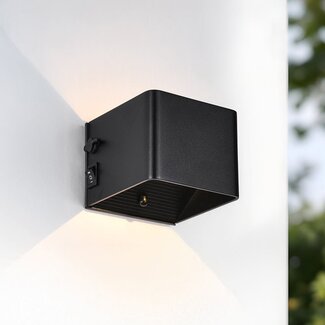
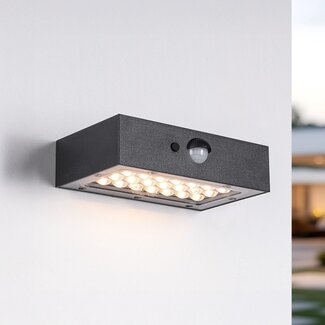
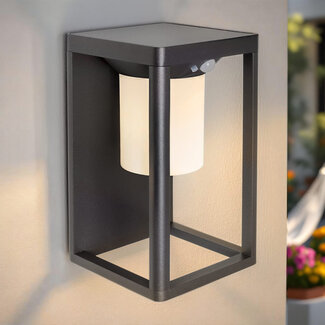
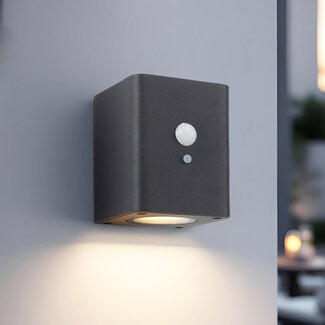
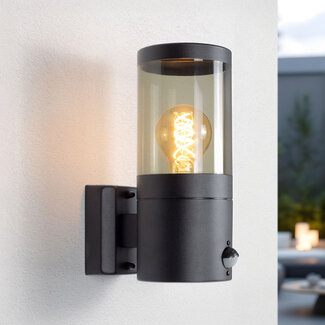
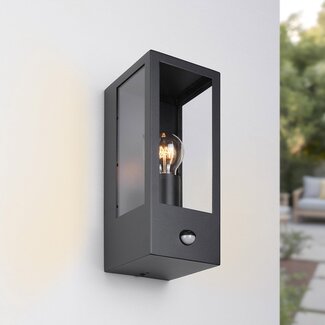
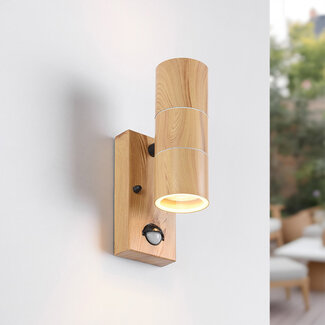
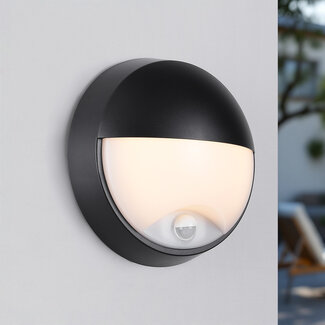
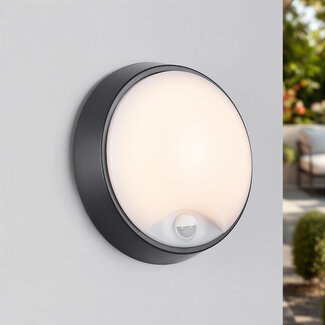
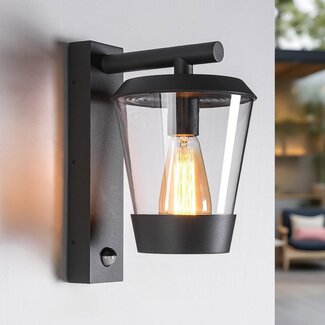
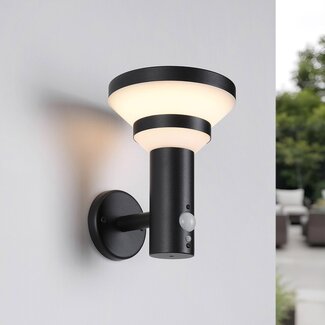
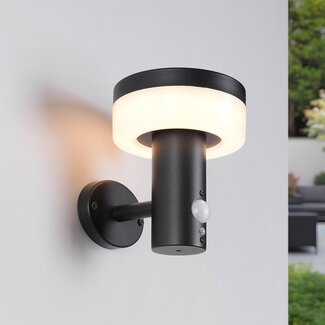
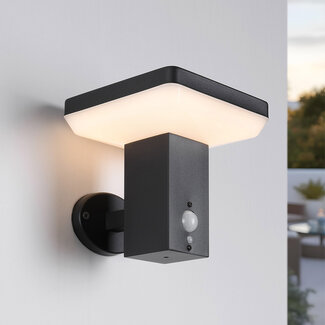
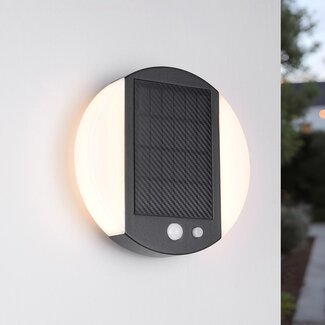
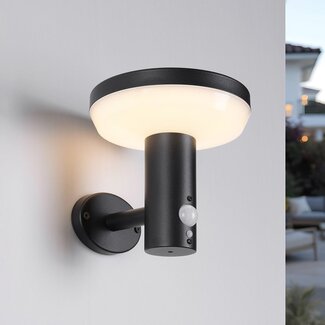
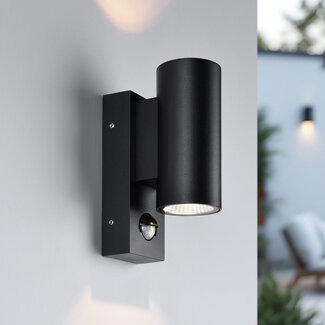
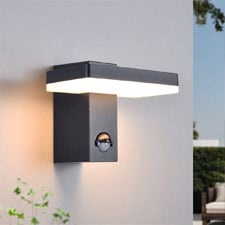
Light exactly when you need it
Many of our models are available with a motion sensor, so the lighting switches on automatically as soon as someone approaches. If you arrive home with your hands full of shopping, for example, there is no need to search for the light switch. This not only provides extra convenience, but also contributes to safety around your home.
Sensor or dusk sensor?
That depends on what you want. A motion sensor responds when someone approaches: the light only comes on when someone is there, which saves energy and makes it more noticeable if someone walks past your house at night. A dusk sensor responds to daylight, so your façade stays lit throughout the evening. A motion sensor makes sense at the front door, while a dusk sensor is more suitable if you want atmospheric lighting along a façade.
What to look for when positioning the sensor
Pay attention to the detection range and angle, as these determine how far away the sensor can detect movement. Ideally, position the sensor across the direction of movement, as it detects movement passing across its field of view better than movement coming directly towards it. Avoid pointing the sensor towards a busy street or a moving tree, as this can cause the light to switch on more often than you want.
A separate sensor is also possible
If you already have outdoor wall lights and want to automate them, you can also use a separate motion sensor to control them. This allows you to operate a whole group of lights at once. With all outdoor lighting, pay attention to the stated protection rating (IP rating), which indicates how well the lamp is protected against moisture, and make sure it is suitable for where you want to install it.


